
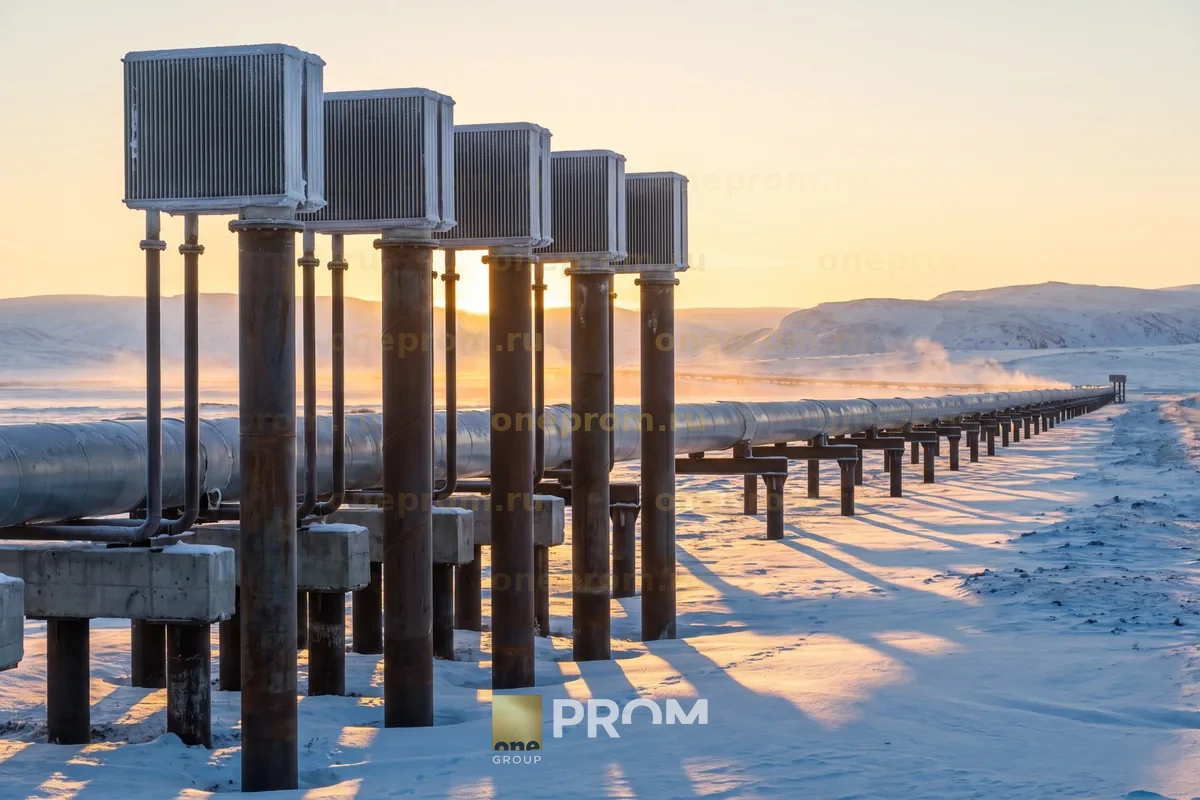
Why ground temperature matters
Permafrost can lose bearing capacity when ice within the soil thaws. Heat from a building, hot pipeline or industrial pad changes the thermal regime of its foundation. Passive cooling may help preserve frozen ground, but it cannot replace geotechnical investigation, foundation calculations or monitoring.
How a two-phase thermosiphon works
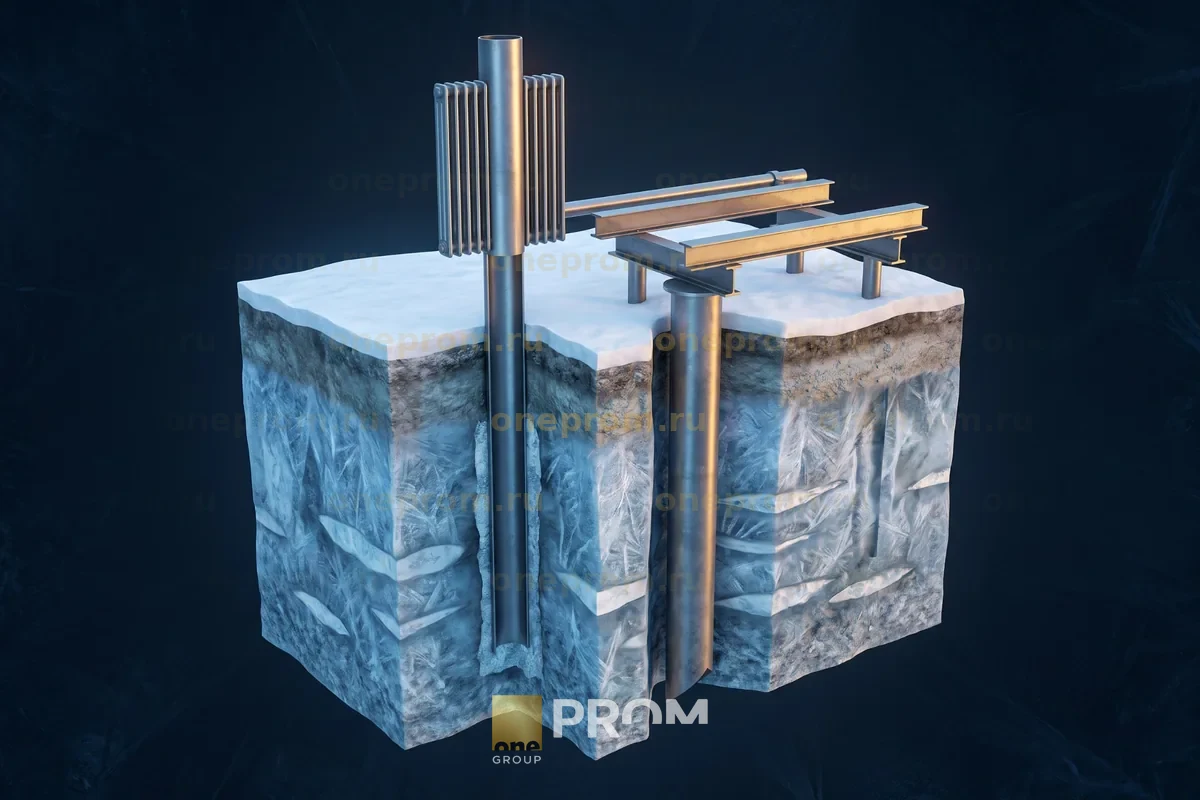
A sealed ground thermosiphon contains a working fluid. When outdoor air is colder than the soil, heat absorbed by its underground evaporator vaporises the fluid. Vapour moves to the finned condenser above ground, releases heat to the air and returns as liquid under gravity. This cycle needs no compressor or external electrical power.
What happens during summer
A conventional passive thermosiphon transfers little heat when outdoor air becomes warmer than the ground. It therefore does not provide active year-round refrigeration. The winter cooling effect must be sufficient to maintain the required ground temperatures through the warm season; this is determined by thermal modelling.
Typical applications
Such systems are used beside pile foundations and near industrial facilities, tanks and pipelines built on frozen ground. The number, depth, spacing and geometry of devices depend on soil stratigraphy, groundwater, climate, snow cover and the structure’s heat input. A universal installation spacing does not exist.
Selection, installation and monitoring
Check the calculated cooling capacity, working-temperature range, casing integrity, installation geometry and accessibility of the condenser. Soil thermometers or monitoring boreholes are needed to verify the actual temperature regime. A cold-looking condenser alone does not prove that the foundation remains within design limits.
Engineering standards
SP 25.13330.2020 covers foundations on permafrost soils; Amendment No. 3 has been in force since 14 June 2026 and updates provisions on cooling devices and geotechnical monitoring. Apply the current text, geological survey results, thermal model and the manufacturer’s documentation rather than relying on the device illustration.
Checklist for an enquiry
Provide the site location, ground-temperature measurements, borehole log, foundation layout, heat sources, expected service life, operating conditions and monitoring requirements. Ask the designer to check performance under both present and projected climate conditions.
Verified standards and scope
Sources are official Rosstandart registry entries. Verify the current amendments and applicability to the particular project and jurisdiction.
Frequently asked questions
Principle and application?
Design and selection?
Can the illustration be used as an installation drawing?
Read next
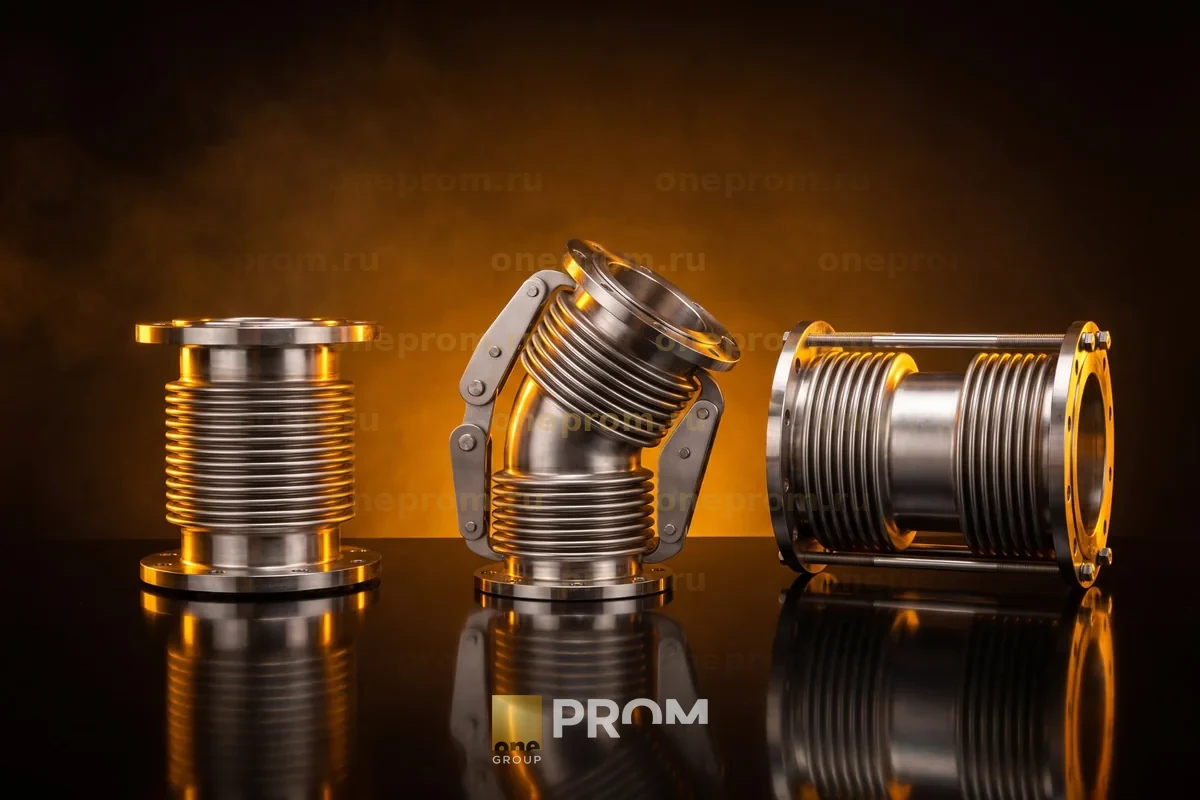
Axial, angular or lateral expansion joint: how to choose
An axial joint takes movement along the pipe, an angular joint permits controlled rotation, and a lateral joint takes transverse displacement. Anchors, guides and pressure.
Reading time: 6 min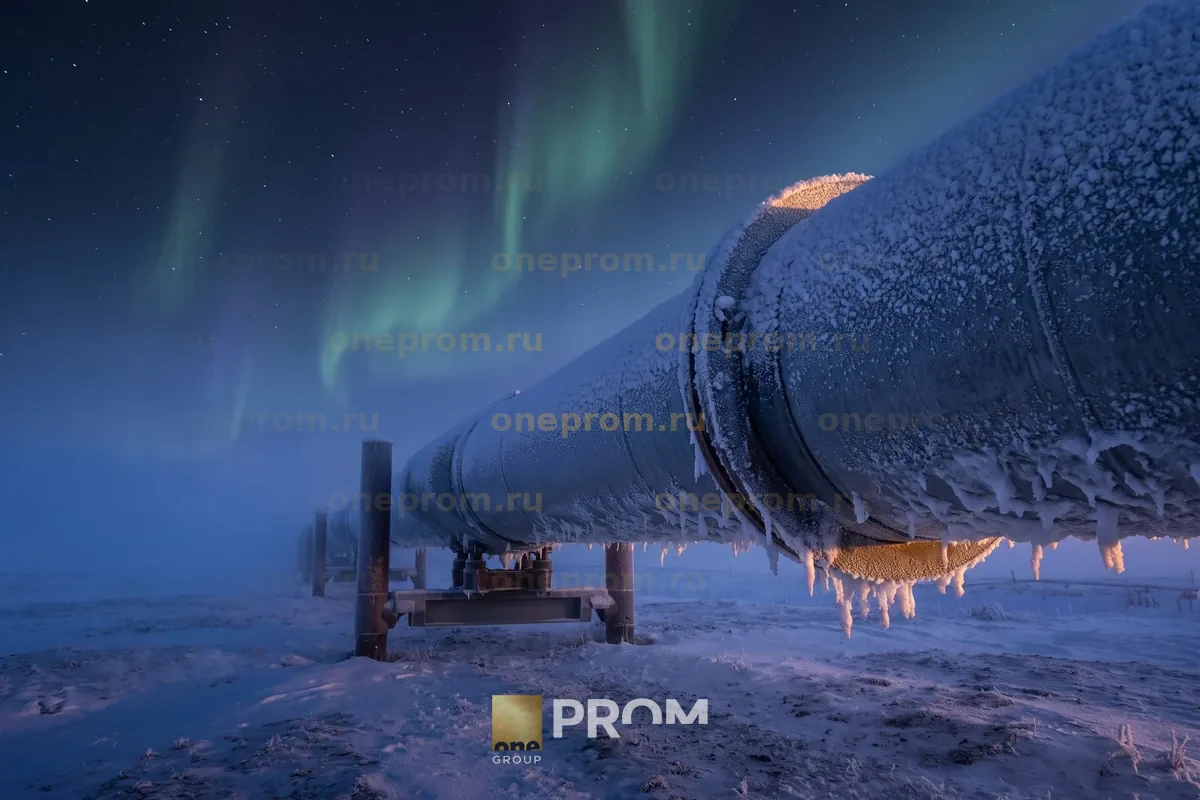
Metal at −50 °C: Cold Brittleness and Steels for the North
Why steel breaks like glass in frost, and how to choose metal for northern pipelines and equipment.
Reading time: 6 min
PSR Tank Sampler: How It Works and How to Choose
How to take a composite sample of a petroleum product across the full tank height without climbing onto the roof.
Reading time: 5 min
Flanges per GOST 33259: Types and Sealing Faces
Plate or weld neck, face B or tongue and groove: flange types and sealing faces explained.
Reading time: 6 min
Two-Stage or Modulating Burner: Which to Choose
Stages, progressive and smooth control: how the output control method affects fuel consumption and boiler life.
Reading time: 5 min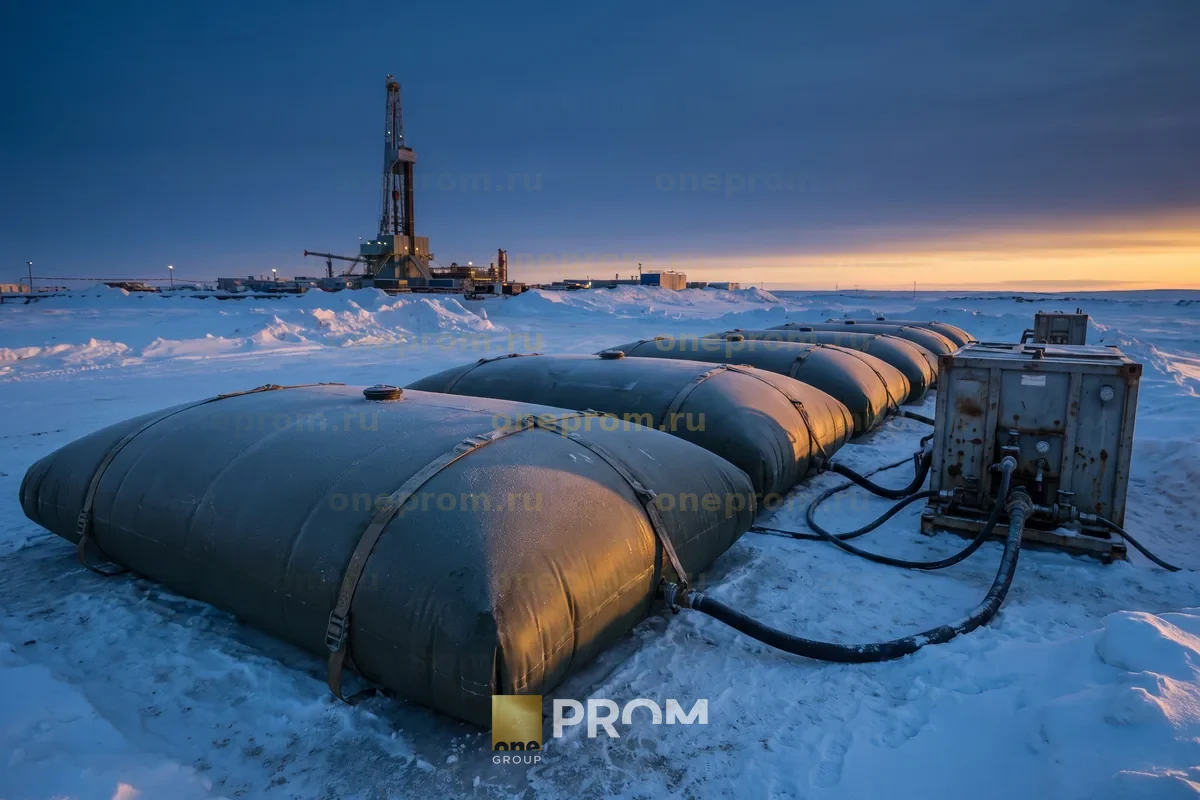
Soft Fuel Tank for the North: How to Choose
Fabric, cold resistance, volume, fittings and site — what to check so a soft tank survives an Arctic winter.
Reading time: 6 min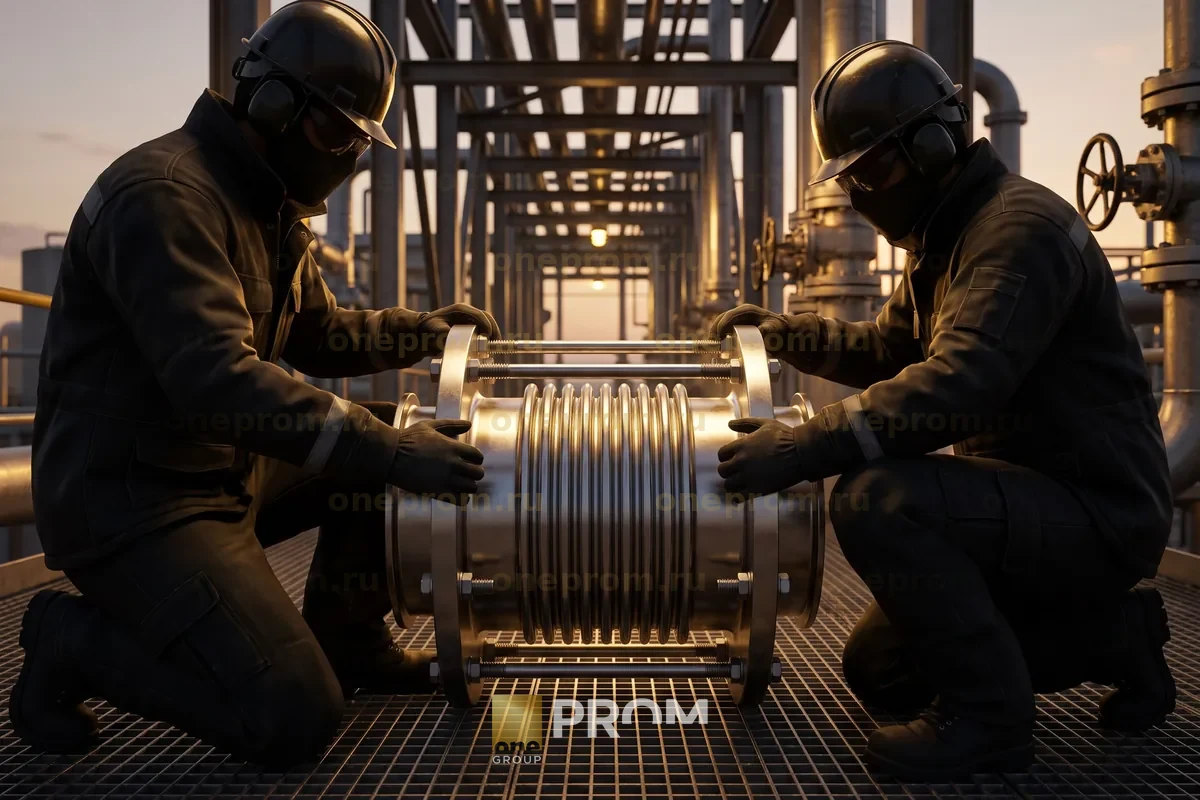
Bellows Expansion Joint Installation: 7 Common Mistakes
Misalignment, forgotten shipping restraints, welding current through the convolutions and 4 more mistakes — plus a correct installation checklist.
Reading time: 6 min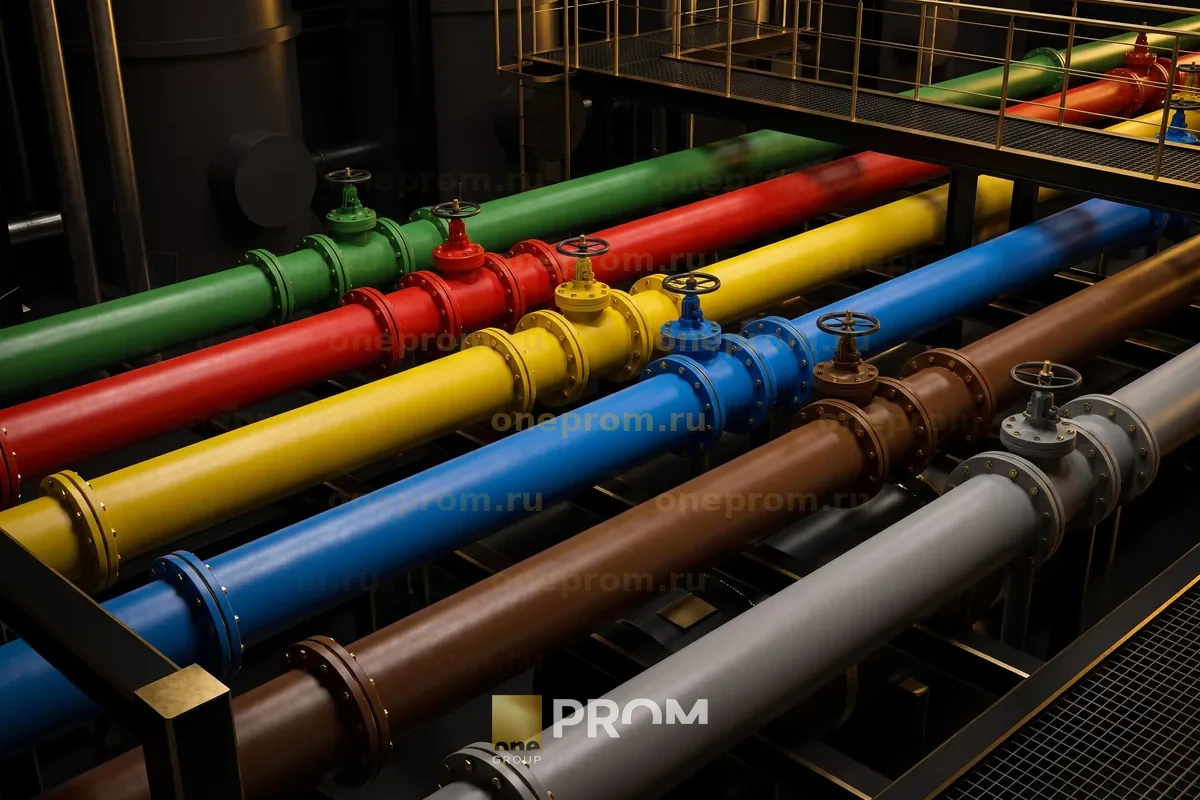
Pipeline Identification Colors per GOST 14202: Cheat Sheet
Green for water, red for steam, yellow for gas. Identification colors, warning rings and painting rules.
Reading time: 5 min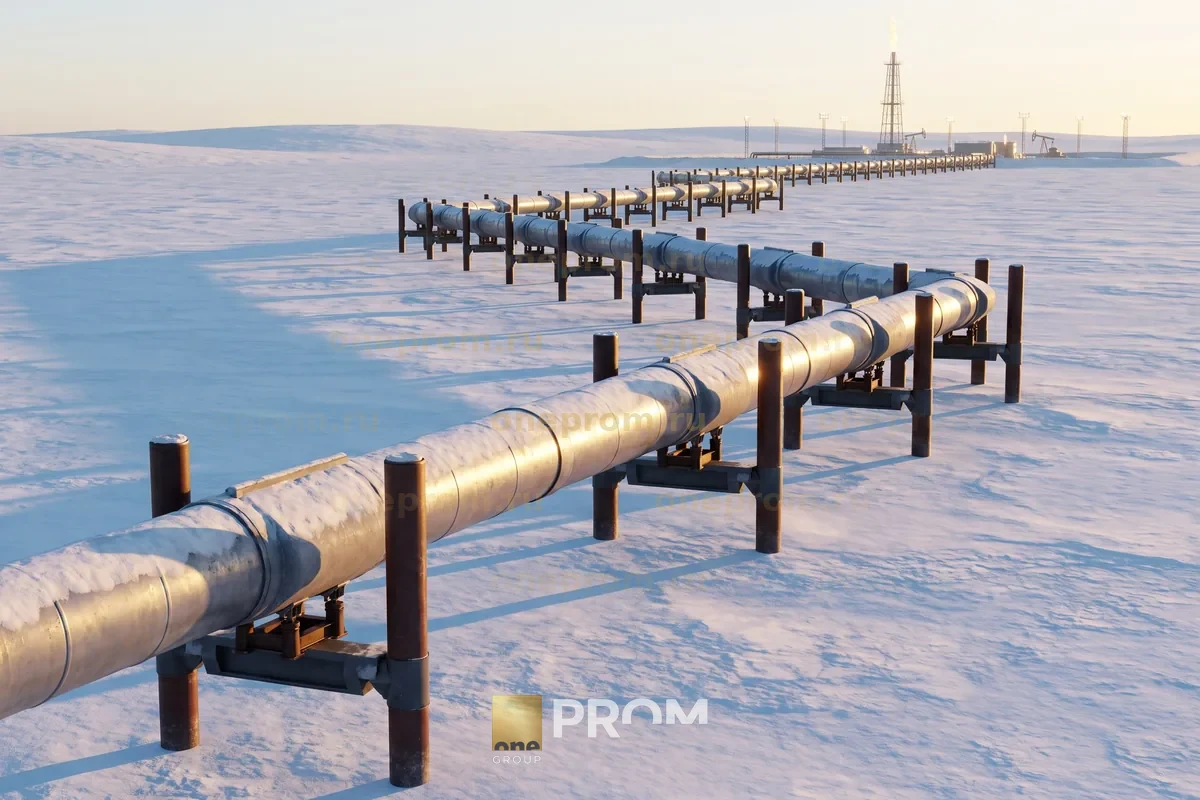
Pipelines on Permafrost: How They Are Built in the North
Why pipes in the North stand on supports, how thermosiphons work and how to compensate a range from −50 to +130 °C.
Reading time: 6 min
How to Size a Variable Frequency Drive
Why drives are sized by current, not kilowatts, normal and heavy duty, installation conditions and the options you need.
Reading time: 6 min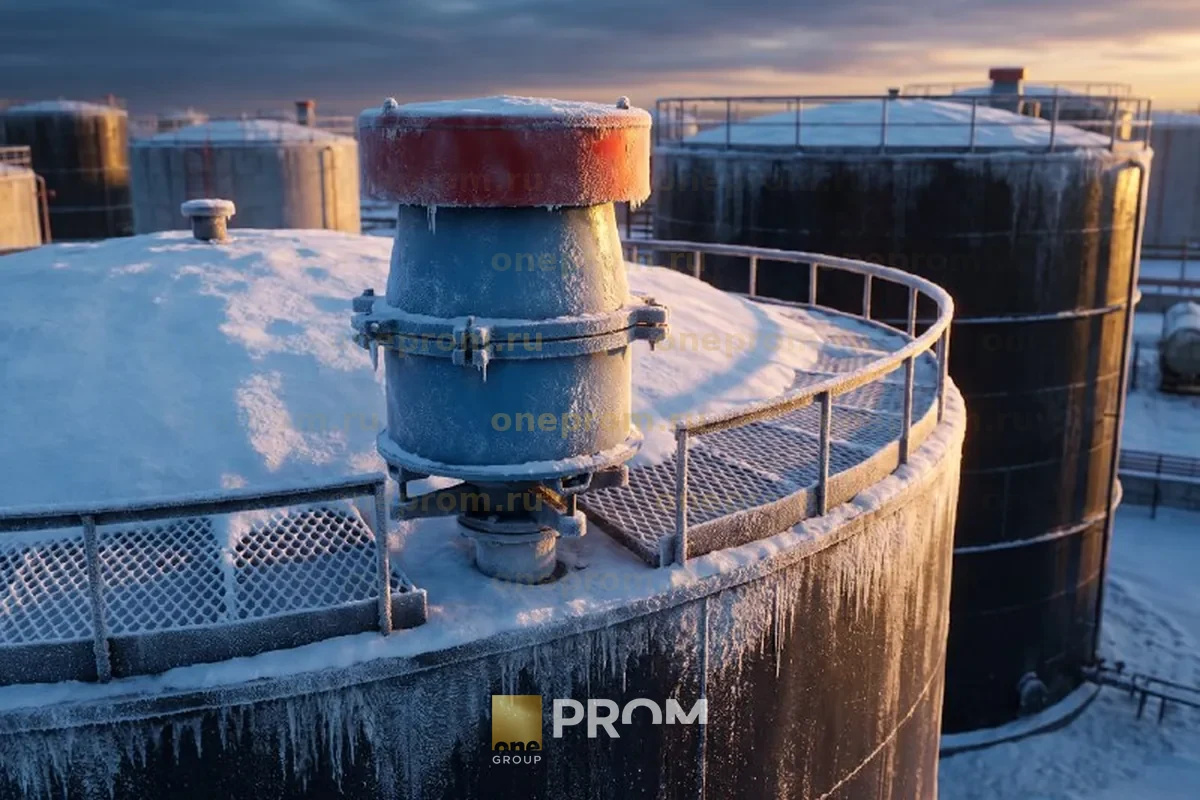
Tank Breather Valve: How It Works
Why a tank breathes, how the valve works, which types exist and how to choose by flow capacity.
Reading time: 5 min
How to Choose a Bellows Expansion Joint: 7 Parameters
Type, diameter, pressure, movement, medium, end connection and cycle life — and what to send the supplier for accurate selection.
Reading time: 6 min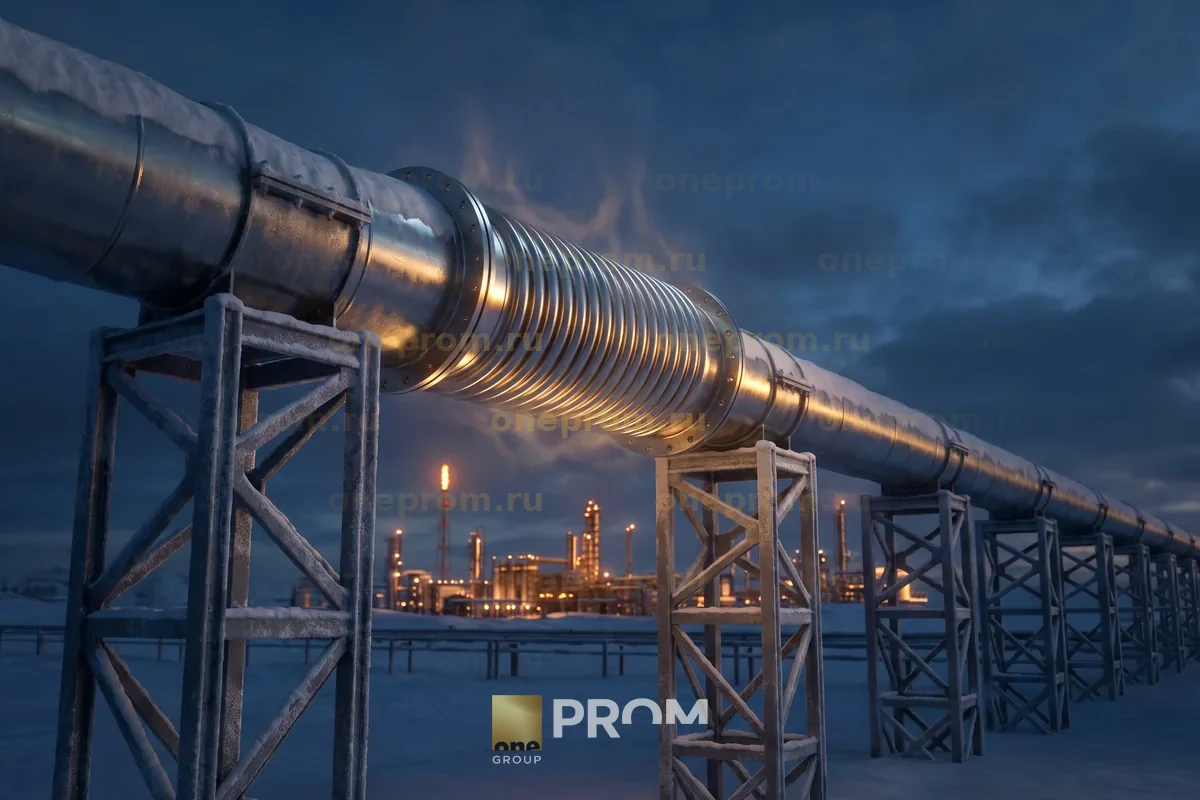
How to Calculate Thermal Expansion of a Pipeline
The ΔL = α·L·Δt formula, coefficients for different materials, a worked example and an online calculator for expansion joint movement.
Reading time: 6 min
Why Bellows Fail: 8 Causes of Expansion Joint Failure
Excessive movement, torsion, supports, corrosion, vibration and installation errors — plus a checklist to avoid them.
Reading time: 7 min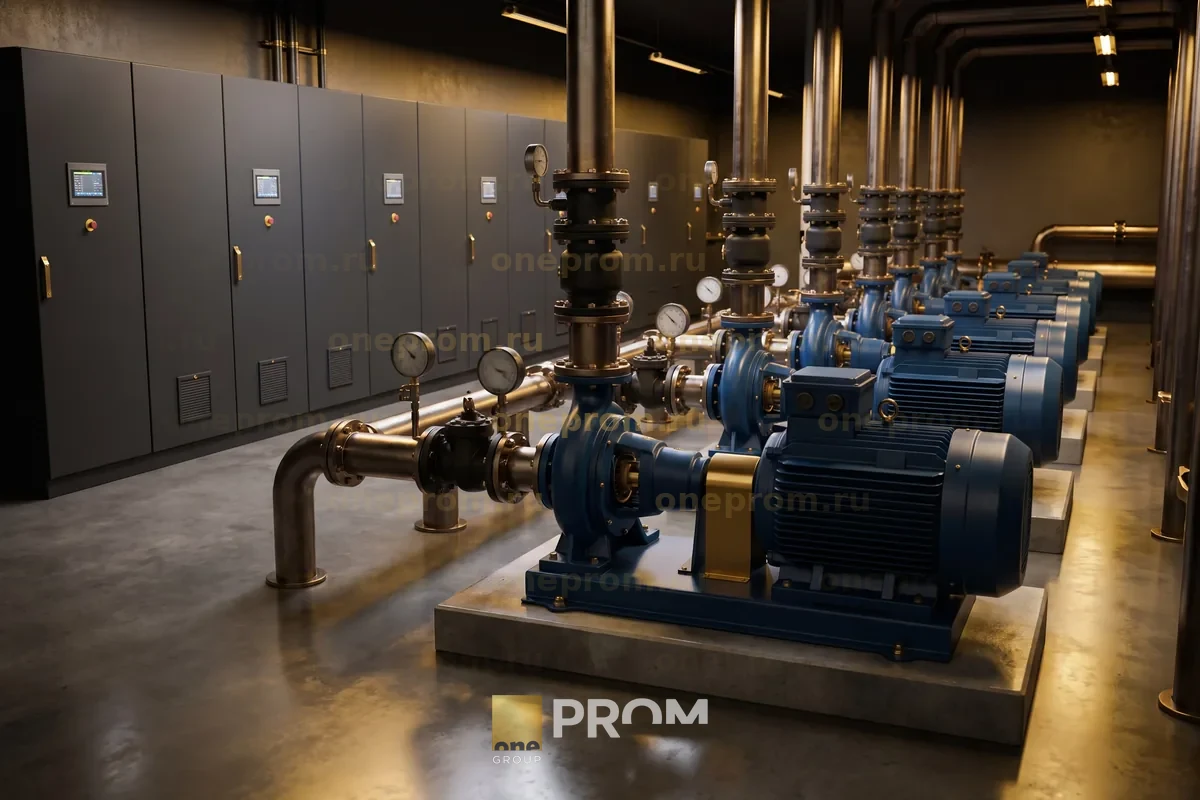
Variable Frequency Drive on a Pump: How Much It Saves
Why power drops with the cube of speed, a worked example and a savings and payback calculator.
Reading time: 6 min