
Calculation formula
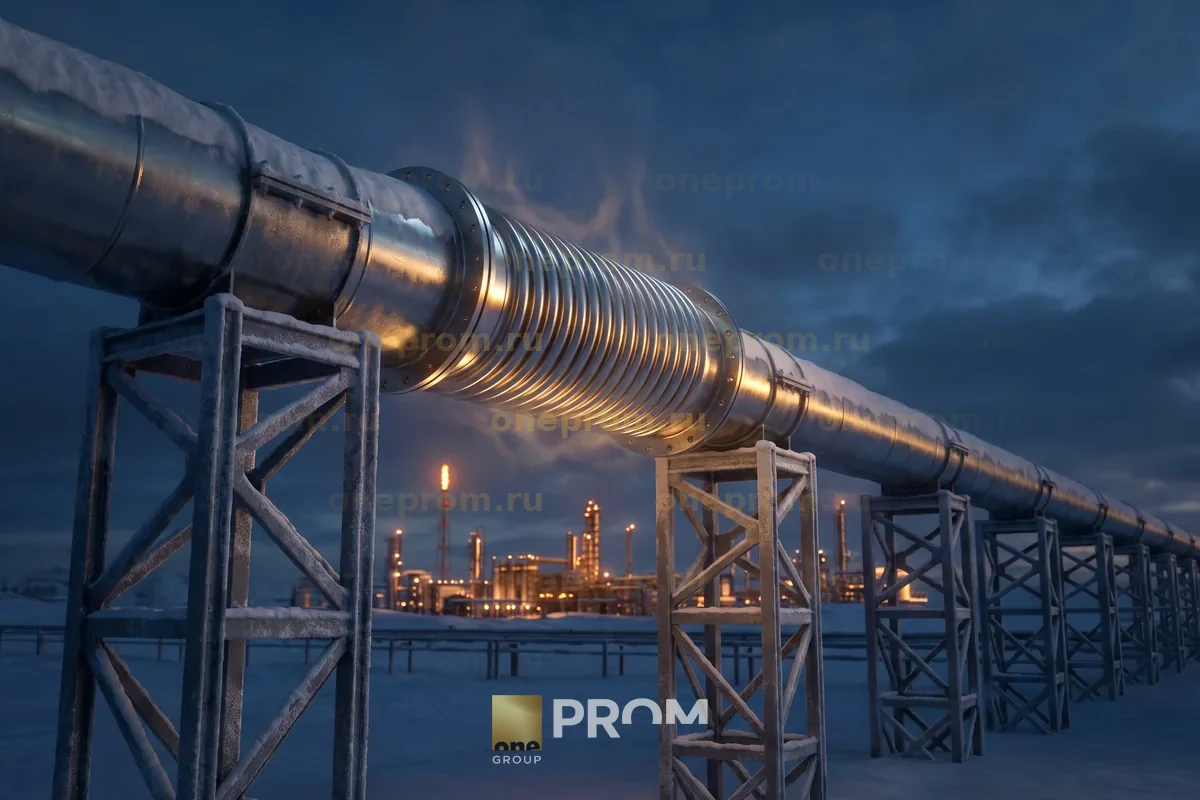
Pipeline expansion is directly proportional to its length and the temperature difference. The longer the section and the hotter it gets, the more expansion has to go somewhere.
- ΔL — expansion of the section, mm;
- α — linear expansion coefficient of the material, mm/(m·°C);
- L — length of the section between anchors, m;
- Δt — temperature difference, °C: operating temperature minus installation temperature.
Calculate each section between two anchors separately: this is the expansion the joint has to absorb.

Expansion coefficients
The coefficient α depends on the pipe material. Below are average values for 20–100 °C used for preliminary calculations.
| Material | α, mm/(m·°C) | α, 10⁻⁶ 1/°C |
|---|---|---|
| Carbon steel (St20, 09G2S) | 0.012 | 12 |
| Stainless steel (12Kh18N10T, AISI 321) | 0.0166 | 16.6 |
| Copper | 0.017 | 17 |
| Aluminium | 0.024 | 24 |
| Polypropylene (PP-R) | 0.15 | 150 |
| Polyethylene (HDPE) | 0.2 | 200 |
Reference values. For high temperatures and precise calculations, use reference data for the specific material grade.
Expansion of a 100 m steel pipeline
A ready-made table for a 100-metre section to quickly estimate the scale.
| Material | Δt = 50 °C | Δt = 100 °C | Δt = 150 °C | Δt = 200 °C |
|---|---|---|---|---|
| Carbon steel, mm | 60 | 120 | 180 | 240 |
| Stainless steel, mm | 83 | 166 | 249 | 332 |
For a different length, scale proportionally: 50 metres — half as much, 200 metres — twice as much.
Worked example
A carbon steel district heating section 60 m long between anchors. Installed at +10 °C, operating temperature +130 °C. The pipeline runs above ground and can cool down to −40 °C during a winter shutdown.
- Expansion when heated: 0.012 × 60 × (130 − 10) = 86.4 mm.
- Contraction when cooled: 0.012 × 60 × (10 − (−40)) = 36 mm.
- Total joint movement: 86.4 + 36 = 122.4 mm.
The expansion joint for this section must absorb at least 122 mm, with a margin. Note that cold contraction added more than 40% to the movement. In the Arctic, where pipelines are installed in summer and stand at −50 °C in winter, this part must never be skipped.
Online calculator
The result is a preliminary estimate. A OnePROM engineer will select the joint precisely, taking pressure, medium and joint type into account.
Select an expansion joint for this resultHow to absorb expansion
Self-compensation
Expansion is absorbed by bends in the route — L- and Z-shaped sections. This is the cheapest option, but it only works if the route allows it and the bend legs are long enough.
U-shaped expansion loops
A loop made of the same pipe. Reliable and maintenance-free, but it takes up a lot of space and adds hydraulic resistance.
Bellows expansion joints
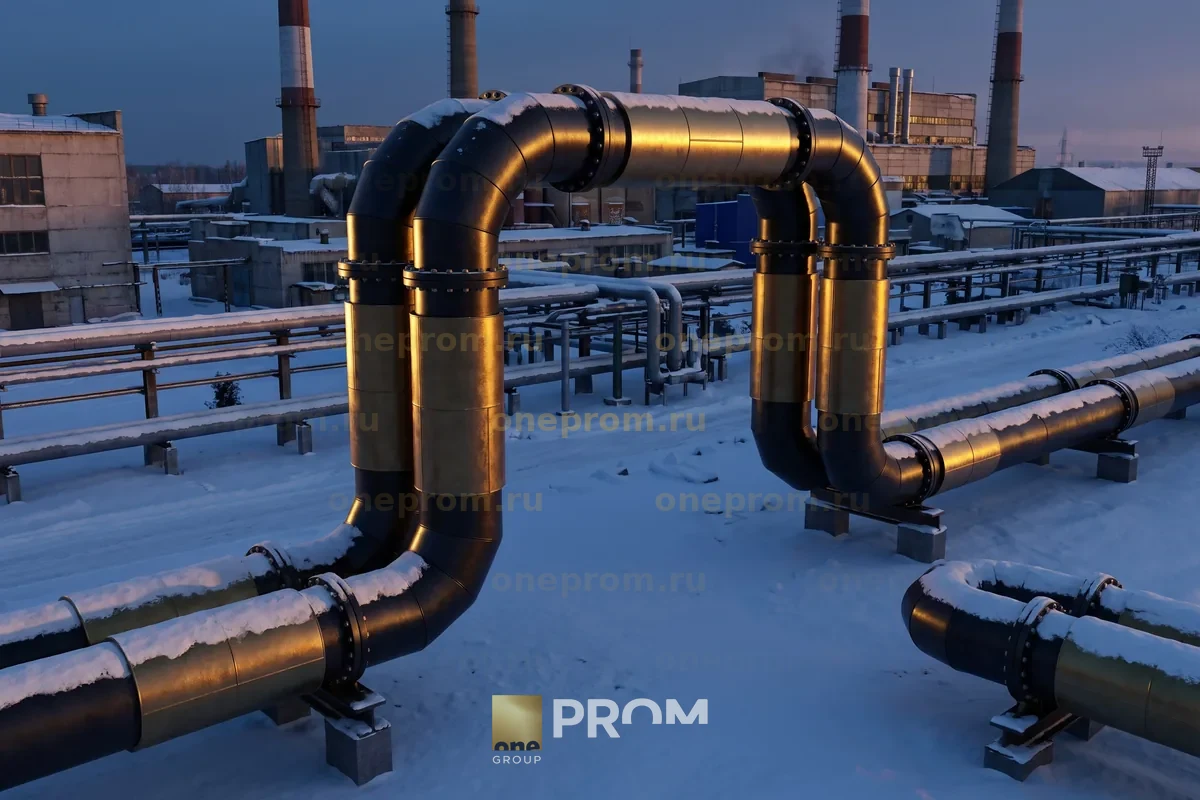
A corrugated stainless steel bellows absorbs expansion by compressing and extending. Compact and installed in-line — which is why they are chosen for heating networks, process pipelines and tight routes.
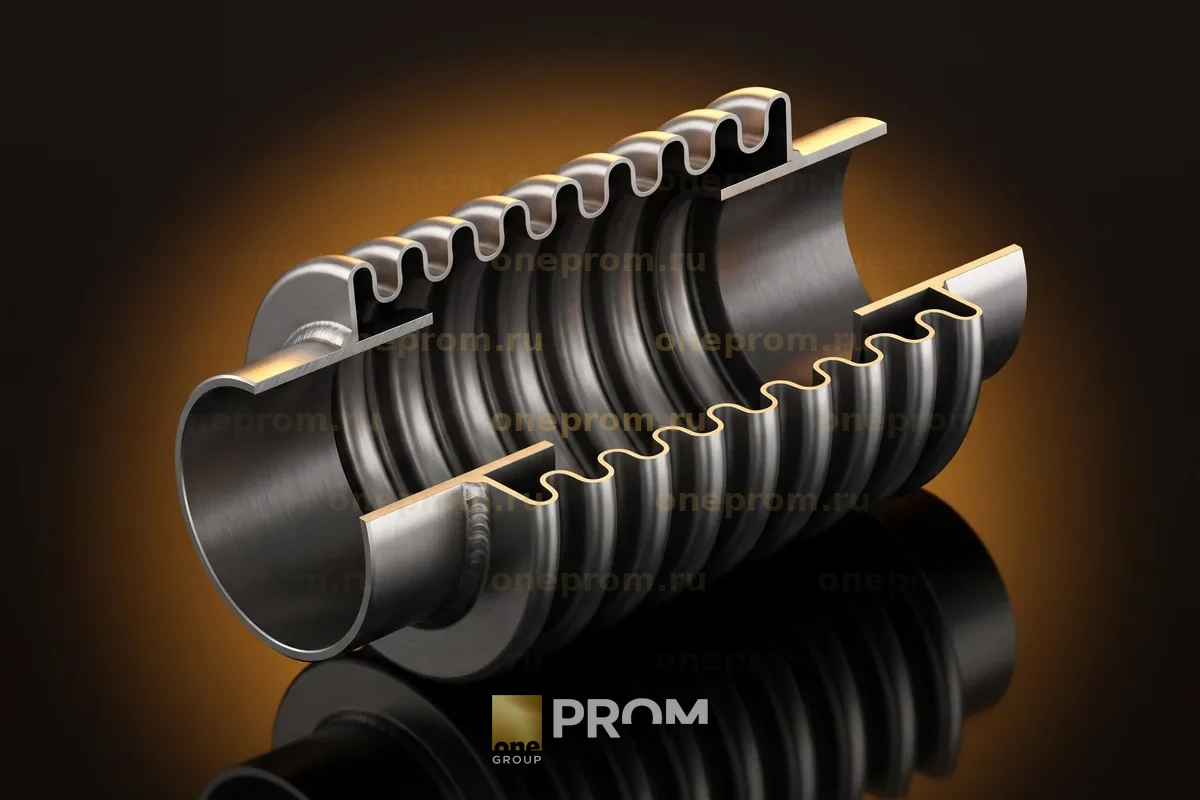
We will select a bellows expansion joint for your calculated movement, pressure and medium.
Expansion joints catalogueAnchors and guides
An expansion joint only works together with supports. Anchors divide the pipeline into sections, and each section gets its own joint. The force from expansion and internal pressure is transferred to the anchors, which are designed for this load.
Guides keep the pipe on its axis so that an axial joint does not bow sideways. According to EJMA recommendations, the first guide is placed no further than 4 pipe diameters from the joint, the second no further than 14 diameters.

FAQ
How much does a steel pipe expand when heated?
Which temperature should be taken as the starting point?
Should pipeline cooling be taken into account?
Why does an expansion joint only work between anchors?
How does the calculation differ for stainless steel and polypropylene?
Which expansion joint to choose based on the result?
What to choose
Read next
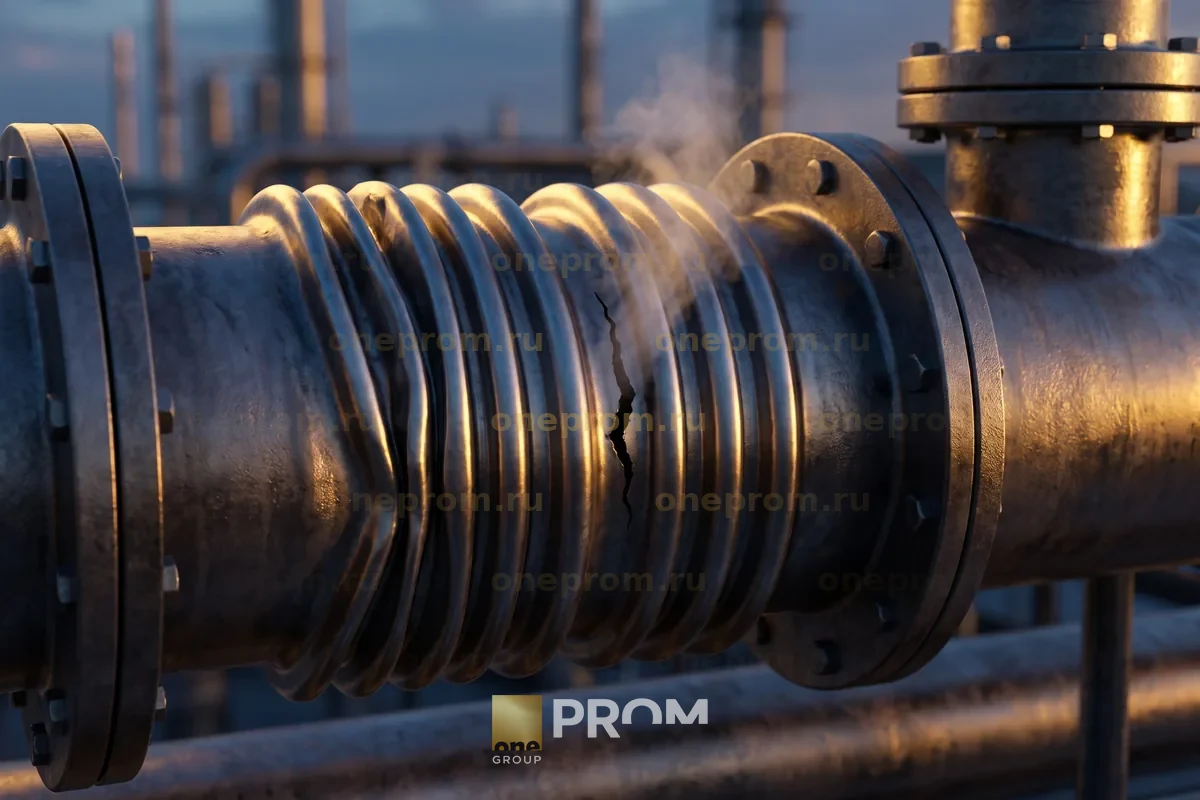
Why Bellows Fail: 8 Causes of Expansion Joint Failure
Excessive movement, torsion, supports, corrosion, vibration and installation errors — plus a checklist to avoid them.
Reading time: 7 min
Variable Frequency Drive on a Pump: How Much It Saves
Why power drops with the cube of speed, a worked example and a savings and payback calculator.
Reading time: 6 min