
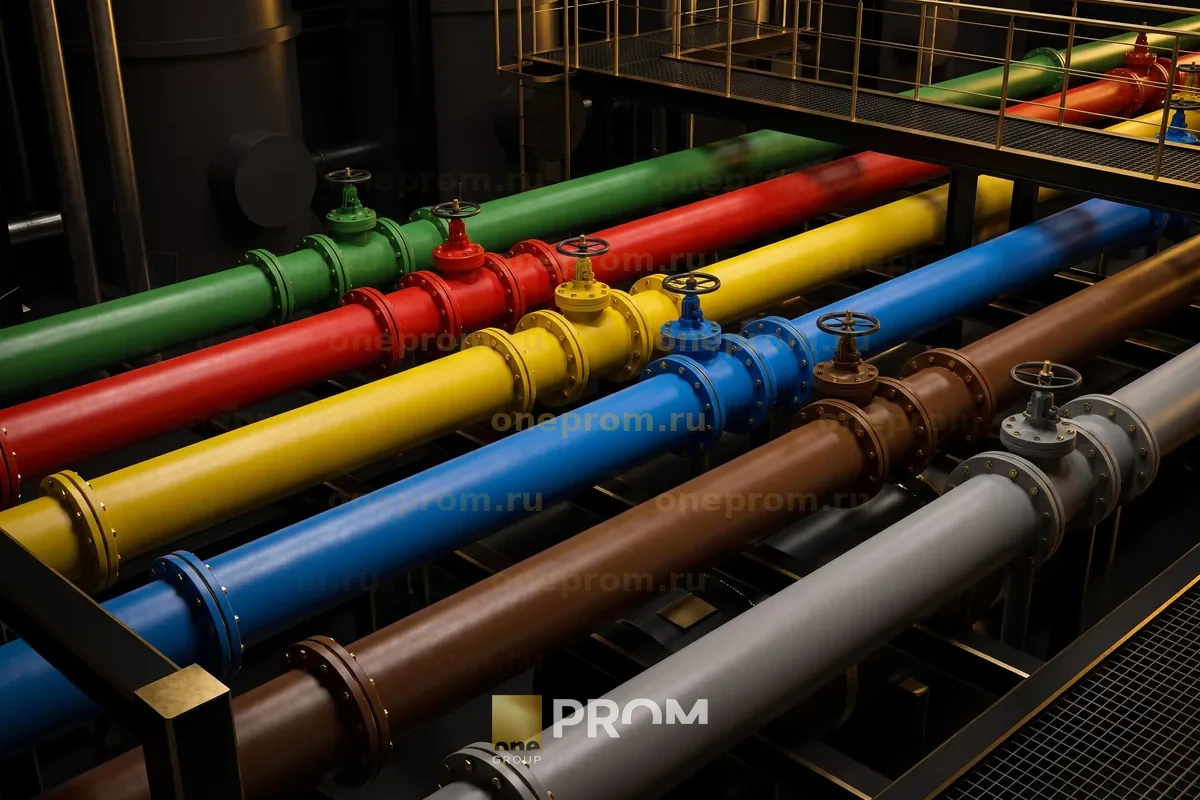
Why pipes are painted different colors
Identification color is a safety measure: an installer, operator or firefighter understands in a second what medium is in the pipe and how dangerous it is. The rules for industrial pipelines in Russia and the CIS are set by GOST 14202.
The standard works on three levels: the color shows the substance group, warning rings show a special hazard, and marker plates and labels specify exactly what flows and where.
Identification colors by substance group
All substances are divided into 10 groups, each with its own color:
| Group | Substance | Color |
|---|---|---|
| 1 | Water | Green |
| 2 | Steam | Red |
| 3 | Air | Blue |
| 4, 5 | Flammable and non-flammable gases | Yellow |
| 6 | Acids | Orange |
| 7 | Alkalis | Violet |
| 8, 9 | Flammable and non-flammable liquids | Brown |
| 0 | Other substances | Grey |
That is why a gas pipe in a courtyard is yellow, boiler room pipes are green and red, and an oil pipeline is brown.
Warning rings
If a substance is particularly hazardous, colored rings are applied over the identification color:
| Ring color | Meaning |
|---|---|
| Red | Highly flammable, fire-hazardous and explosive substances |
| Yellow | Hazardous and harmful substances: poisonous, toxic, causing burns, as well as high pressure or deep vacuum |
| Green | Safe and neutral substances |
The number of rings shows the hazard level by pressure and temperature: the more rings, the more dangerous. Exact limits are in the GOST 14202 table for each substance group.
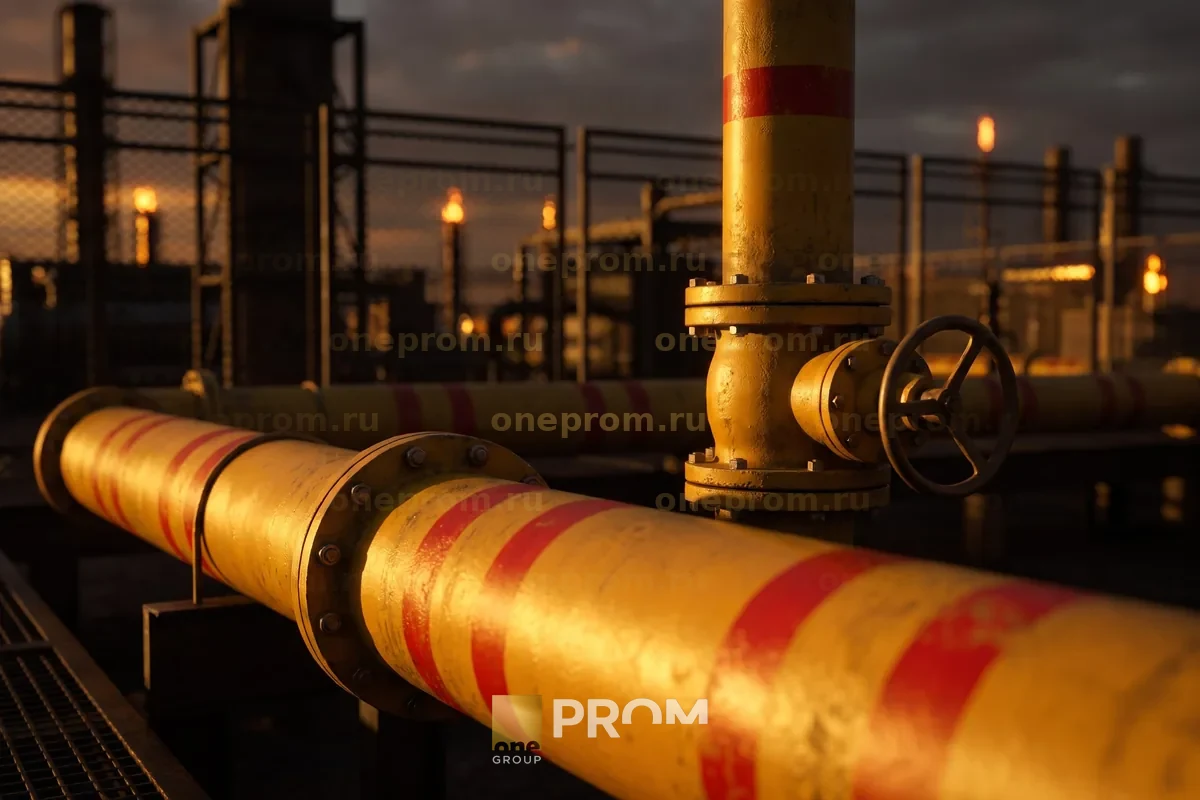
How the marking is applied
- Full painting — along the entire pipe length;
- Painting in sections — at the most visible and critical points: branches, valves and instruments, wall and floor penetrations, building entrances;
- Arrows show the flow direction;
- Marker plates state the medium, pressure and temperature.
On insulated pipes the color is applied to the jacketing — the metal cladding or protective sheath.
Common mistakes
- Painting the whole pipe in the ring color — a ring must differ from the base color, otherwise it cannot be seen.
- Forgetting flow direction arrows — the operator has to guess which line is supply and which is return.
- Not renewing the marking after repairs: the replaced section stays in grey primer.
- Using corporate colors instead of standard ones — outside personnel will not understand them in an emergency.
We supply pipes, elbows, flanges and valves for your pipeline.
Equipment catalogueFAQ
What color is a gas pipe?
What color are heating pipes?
Must the whole pipe be painted?
What do red rings on a yellow pipe mean?
How is an insulated pipe marked?
Read next
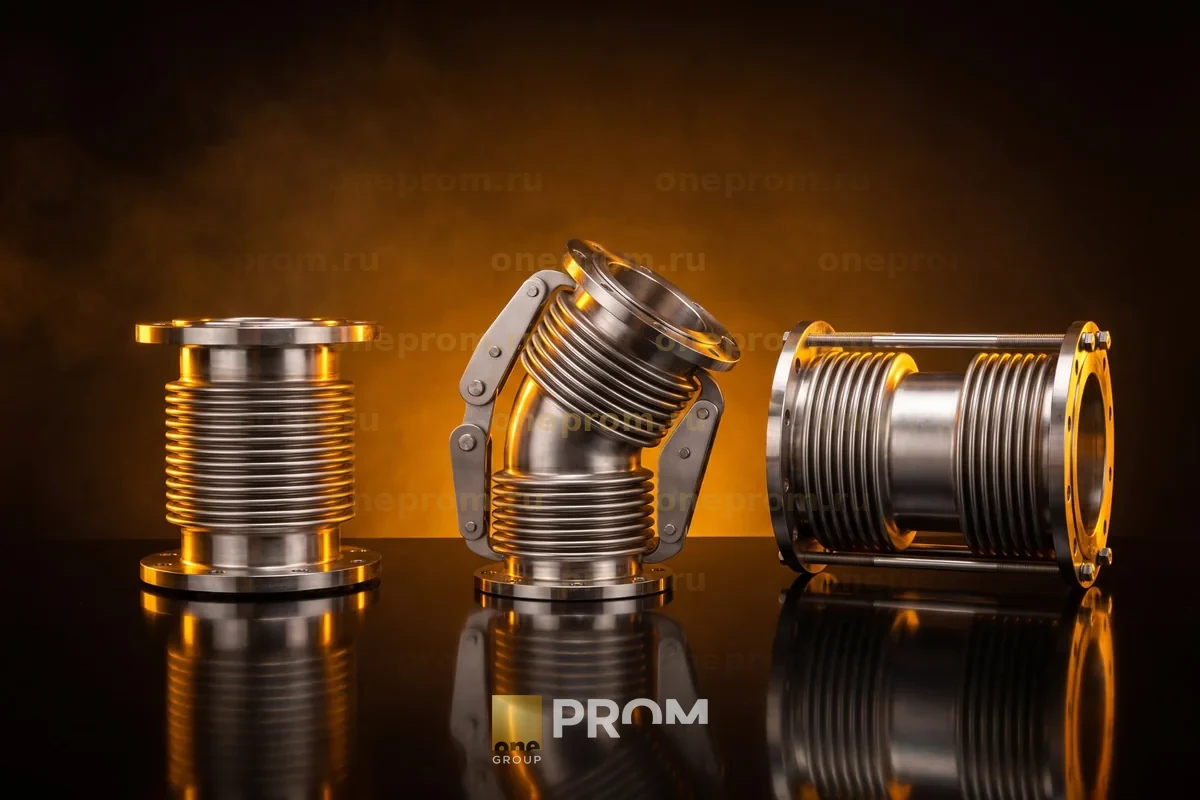
Axial, angular or lateral expansion joint: how to choose
An axial joint takes movement along the pipe, an angular joint permits controlled rotation, and a lateral joint takes transverse displacement. Anchors, guides and pressure.
Reading time: 6 min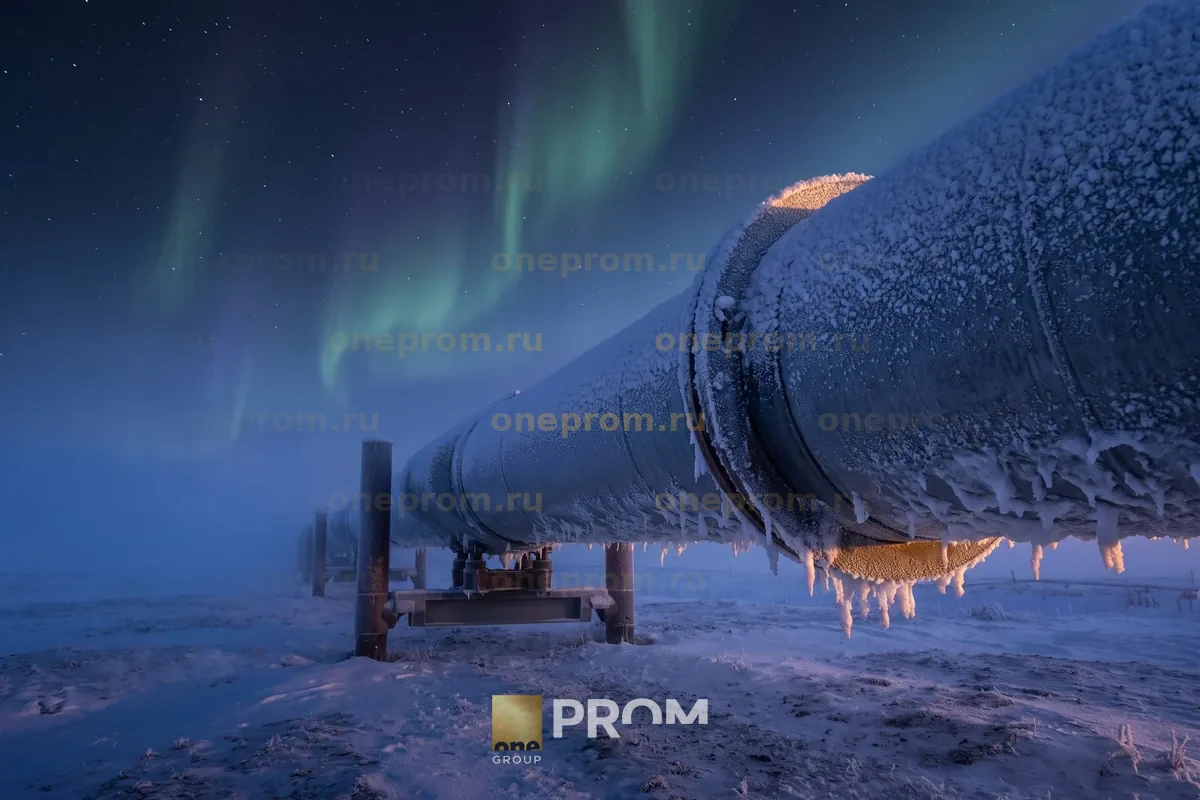
Metal at −50 °C: Cold Brittleness and Steels for the North
Why steel breaks like glass in frost, and how to choose metal for northern pipelines and equipment.
Reading time: 6 min
PSR Tank Sampler: How It Works and How to Choose
How to take a composite sample of a petroleum product across the full tank height without climbing onto the roof.
Reading time: 5 min
Flanges per GOST 33259: Types and Sealing Faces
Plate or weld neck, face B or tongue and groove: flange types and sealing faces explained.
Reading time: 6 min
Ground thermosiphons: passive cooling without power
Passive thermosiphons transfer ground heat to cold outdoor air by evaporation and condensation. They operate mainly in winter; foundation design requires thermal calculations.
Reading time: 6 min
Two-Stage or Modulating Burner: Which to Choose
Stages, progressive and smooth control: how the output control method affects fuel consumption and boiler life.
Reading time: 5 min
Soft Fuel Tank for the North: How to Choose
Fabric, cold resistance, volume, fittings and site — what to check so a soft tank survives an Arctic winter.
Reading time: 6 min
Bellows Expansion Joint Installation: 7 Common Mistakes
Misalignment, forgotten shipping restraints, welding current through the convolutions and 4 more mistakes — plus a correct installation checklist.
Reading time: 6 min
Pipelines on Permafrost: How They Are Built in the North
Why pipes in the North stand on supports, how thermosiphons work and how to compensate a range from −50 to +130 °C.
Reading time: 6 min
How to Size a Variable Frequency Drive
Why drives are sized by current, not kilowatts, normal and heavy duty, installation conditions and the options you need.
Reading time: 6 min
Tank Breather Valve: How It Works
Why a tank breathes, how the valve works, which types exist and how to choose by flow capacity.
Reading time: 5 min
How to Choose a Bellows Expansion Joint: 7 Parameters
Type, diameter, pressure, movement, medium, end connection and cycle life — and what to send the supplier for accurate selection.
Reading time: 6 min
How to Calculate Thermal Expansion of a Pipeline
The ΔL = α·L·Δt formula, coefficients for different materials, a worked example and an online calculator for expansion joint movement.
Reading time: 6 min
Why Bellows Fail: 8 Causes of Expansion Joint Failure
Excessive movement, torsion, supports, corrosion, vibration and installation errors — plus a checklist to avoid them.
Reading time: 7 min
Variable Frequency Drive on a Pump: How Much It Saves
Why power drops with the cube of speed, a worked example and a savings and payback calculator.
Reading time: 6 min