
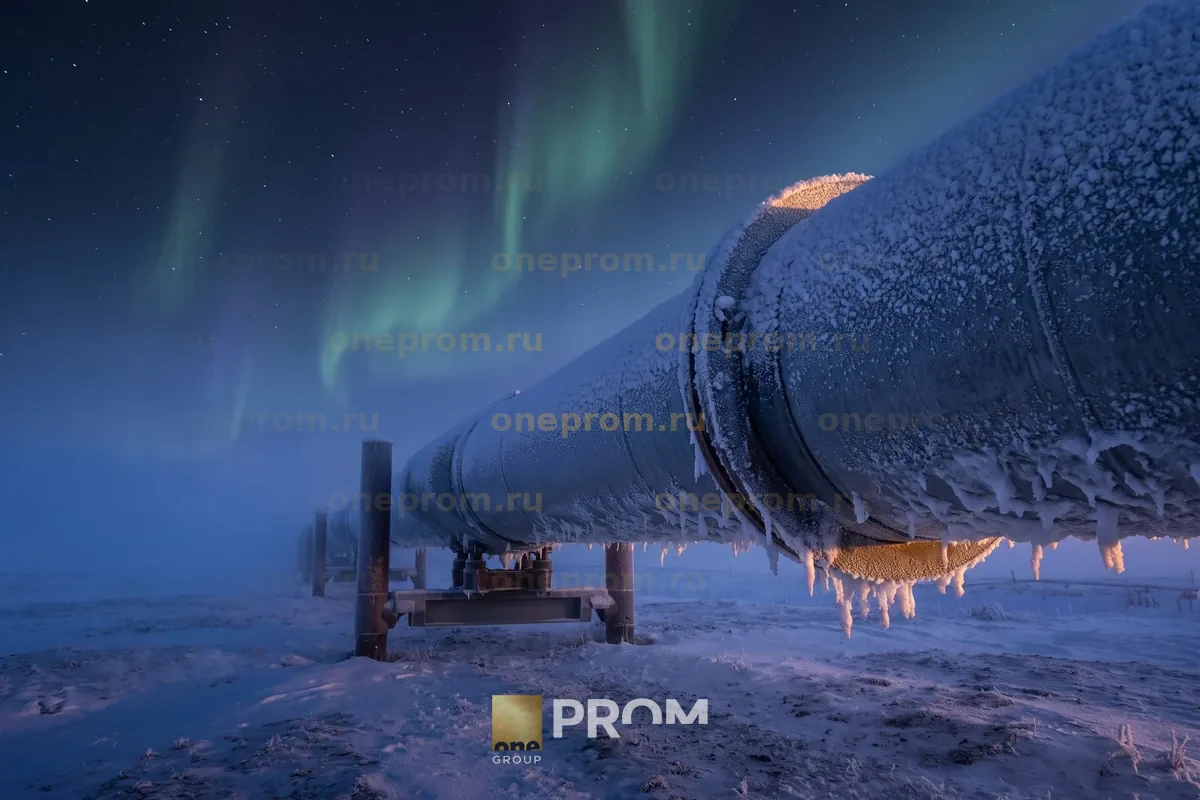
What cold brittleness is
As temperature drops, many steels lose toughness. Above a certain limit, overloaded metal first stretches and bends — a ductile fracture. Below it, the metal splits with almost no deformation — a brittle fracture. This limit is called the ductile-to-brittle transition temperature.
A brittle crack runs very fast and can travel a long way along a pipe or tank. For the North, therefore, not only steel strength matters but also its behaviour in frost.
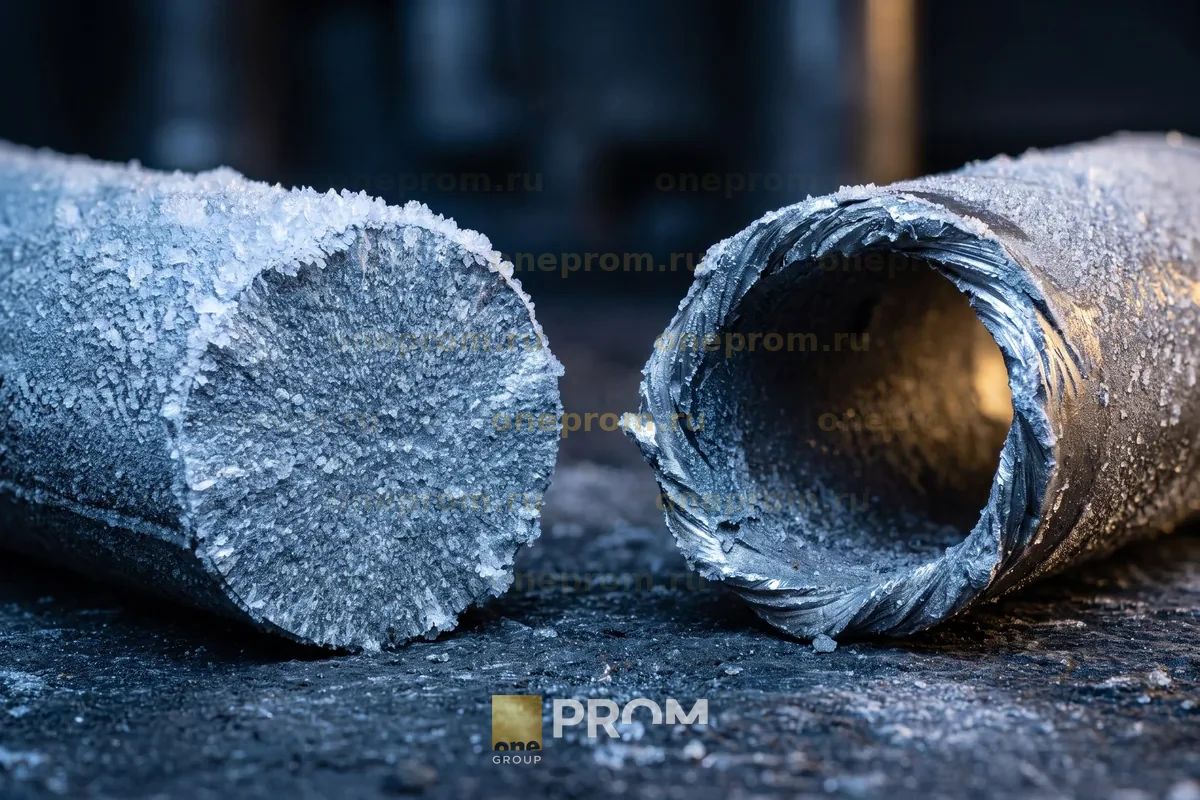
How it is tested: impact toughness
Susceptibility to brittle fracture is assessed by the notched-bar impact test per GOST 9454: a notched specimen is broken by a pendulum at a set sub-zero temperature and the absorbed energy — the impact toughness (KCU, KCV) — is measured.
In mill certificates for northern projects, check at what temperature impact toughness is confirmed. A steel with good values at +20 °C may not be suitable for −50 °C.
Steels used in the North
| Material | Behaviour in frost | Where it is used |
|---|---|---|
| Ordinary-quality carbon steels | Relatively high transition temperature | Outdoor structures in the North — limited use, by calculation only |
| Low-alloy 09G2S | Retains toughness at low temperatures | Pipelines, tanks, steel structures, flanges for cold climates |
| Austenitic stainless 12Kh18N10T | Not prone to cold brittleness, tough in severe frost | Expansion joint bellows, valves, equipment for aggressive media |
The final material choice is confirmed by calculation and the project's minimum temperature requirements.
KhL design
Equipment for cold climates is produced in climatic design KhL or UKhL per GOST 15150. It covers not only body materials but also seals, lubricants and rubber parts — they also lose properties in frost.
What matters in practice
- Do not hit frozen pipes and valves with a sledgehammer — an impact in frost can split the metal.
- Avoid stress concentrators: abrupt transitions, lack of fusion, notches.
- Weld using procedures qualified for low temperatures, with weld inspection.
- Check that certificates confirm impact toughness at a temperature no higher than the minimum operating temperature.
We supply pipes, flanges, expansion joints and valves in northern design.
Equipment catalogueFAQ
Why do pipes crack in frost?
Which steel is suitable for −50 °C?
What is the KhL design?
What does impact toughness show?
Read next
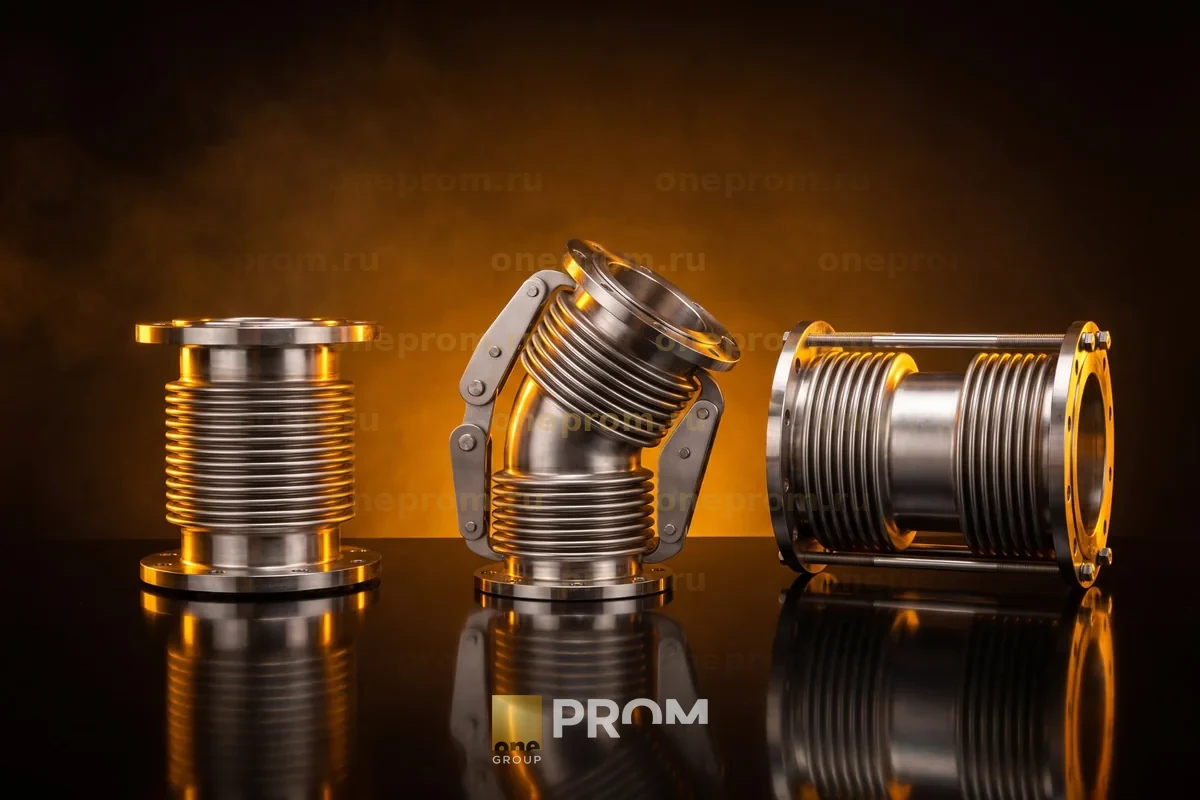
Axial, angular or lateral expansion joint: how to choose
An axial joint takes movement along the pipe, an angular joint permits controlled rotation, and a lateral joint takes transverse displacement. Anchors, guides and pressure.
Reading time: 6 min
PSR Tank Sampler: How It Works and How to Choose
How to take a composite sample of a petroleum product across the full tank height without climbing onto the roof.
Reading time: 5 min
Flanges per GOST 33259: Types and Sealing Faces
Plate or weld neck, face B or tongue and groove: flange types and sealing faces explained.
Reading time: 6 min
Ground thermosiphons: passive cooling without power
Passive thermosiphons transfer ground heat to cold outdoor air by evaporation and condensation. They operate mainly in winter; foundation design requires thermal calculations.
Reading time: 6 min
Two-Stage or Modulating Burner: Which to Choose
Stages, progressive and smooth control: how the output control method affects fuel consumption and boiler life.
Reading time: 5 min
Soft Fuel Tank for the North: How to Choose
Fabric, cold resistance, volume, fittings and site — what to check so a soft tank survives an Arctic winter.
Reading time: 6 min
Bellows Expansion Joint Installation: 7 Common Mistakes
Misalignment, forgotten shipping restraints, welding current through the convolutions and 4 more mistakes — plus a correct installation checklist.
Reading time: 6 min
Pipeline Identification Colors per GOST 14202: Cheat Sheet
Green for water, red for steam, yellow for gas. Identification colors, warning rings and painting rules.
Reading time: 5 min
Pipelines on Permafrost: How They Are Built in the North
Why pipes in the North stand on supports, how thermosiphons work and how to compensate a range from −50 to +130 °C.
Reading time: 6 min
How to Size a Variable Frequency Drive
Why drives are sized by current, not kilowatts, normal and heavy duty, installation conditions and the options you need.
Reading time: 6 min
Tank Breather Valve: How It Works
Why a tank breathes, how the valve works, which types exist and how to choose by flow capacity.
Reading time: 5 min
How to Choose a Bellows Expansion Joint: 7 Parameters
Type, diameter, pressure, movement, medium, end connection and cycle life — and what to send the supplier for accurate selection.
Reading time: 6 min
How to Calculate Thermal Expansion of a Pipeline
The ΔL = α·L·Δt formula, coefficients for different materials, a worked example and an online calculator for expansion joint movement.
Reading time: 6 min
Why Bellows Fail: 8 Causes of Expansion Joint Failure
Excessive movement, torsion, supports, corrosion, vibration and installation errors — plus a checklist to avoid them.
Reading time: 7 min
Variable Frequency Drive on a Pump: How Much It Saves
Why power drops with the cube of speed, a worked example and a savings and payback calculator.
Reading time: 6 min